
Ever since my fall foraging classes finished in November, I have been foraging for myself and my family quite avidly. I’ve put more energy and time into gathering, harvesting and processing wild food than I’ve done in the past several years.
Besides being an activity I thoroughly enjoy, making that enough of a reason in itself, I believe that another motivation for my current drive to gather and process food is as an emotional coping response to a rapidly changing world. Self sufficiency in any form is empowering when there is seemingly less stability coming from the outside world that sustains almost all of our current lifestyles.
If you look at foraging as a purely time-per-calorie equation, it may not seem worth it, even with rising food prices in grocery stores. But you can’t just think about calories, since that’s not our only goal when buying food. Most people purchase expensive fruits and vegetables imported from Mexico or the tropics not because they are high in calories, but for the flavor, unique nutritional profile (rich in health-sustaining vitamins, flavonoids and polyphenols), freshness and even medicinal value. Also, supplements and herbal extracts are purchased by the more holistic minded of us, and many of these beneficial nutrients and medicinal compounds can be found in low-calorie wild-harvested herbs and greens.
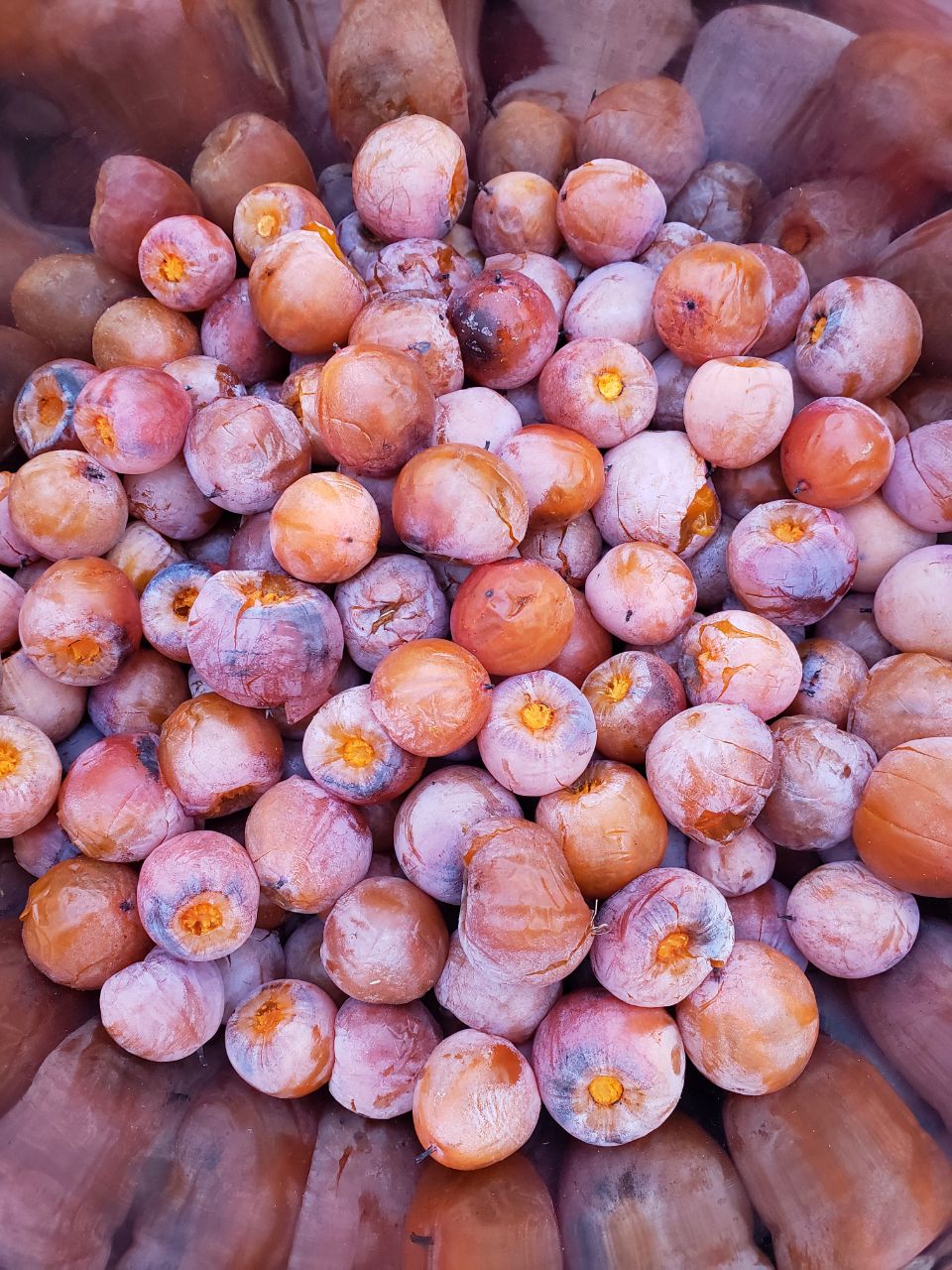
Whatever the reasons, I am finding a deeper sense of fulfillment in my foraging activities at this time. The best part is when I’ve harvested or gathered something, processed it appropriately, and managed to turn it into a food product that my whole family enjoys! These photos illustrate my most recent win:


I’ve made wild persimmon fruit leather in the past, but this particular batch turned out literally perfect, as I followed specific instructions on drying temperature and time from some fruit leather recipes online. It’s soft, pliable, hearty and flavorful, and everyone is reaching for more! Only about half the persimmons in that bowl were turned into fruit leather (so I have plenty remaining for other uses), and the sampling of fruit leather on the plate was only about a third of what I was able to make!
Besides persimmons, my other major foraging focus this fall has been black walnuts. I’ve gathered these for many years, but not in large amounts, as it’s tedious and time consuming to process them to remove the hulls, and then hand crack each walnut using a hammer, picking out the tiny pieces with a nut pick. They have incredibly hard shells that no standard nutcracker is a match for, even the more heavy duty ones that work for macadamia nuts. However, I did some more research into this subject recently, and found a truly heavy duty nutcracker that is actually designed for black walnuts and hickory nuts, which have the hardest shells of any nut!
It is called Grandpa’s Goody Getter, and it’s pretty epic. It was designed and manufactured by an old mountain man from the Ozarks, and ended up being my birthday present to myself this year. I’m not going to lie, it’s still time consuming to crack these things, but it IS quicker, cleaner and much more enjoyable with this revolutionary contraption.

I’ve also been gathering and processing acorns of various types. Most of my acorn processing experience was while living in California several years ago, so now I’m getting to experiment more with the nuances of our native Texas varieties. The main species I’ve been using are bur oak (Quercus macrocarpa) and Shumard oak (Quercus shumardii). Bur oaks produce the largest acorns in Texas, and are in the white oak group, so are higher in carbohydrates and therefore sweeter/starchier (once adequately leached of tannins). Shumard is a type of red oak that makes larger acorns than most other red oaks in this area. Red oaks are higher in fats/oils, so make a richer food substance, but they’re also usually higher in tannins, so take longer to leach.
After experimenting with different leaching methods, the quick cold leaching method I describe in my North Texas Edible Wild Plant Basics ebook is still my favorite method for leaching acorns.
Here is some acorn porridge I made for breakfast yesterday. I cooked the acorn flour in water like making oatmeal, then added wild black walnut pieces, raw honey and coconut butter.
I’m calling it “Oak-meal” 🙂


What else has been fun, foraging wise? Last Thanksgiving, I happened to start talking to my cousin about making yaupon holly leaves into caffeinated tea, and she realized she has some large yaupon shrubs in her yard. Amazingly, she remembered our conversation from last year, and this Thanksgiving she brought me a large bag of yaupon branches! So I removed all the leaves from the branches:


After removing the leaves, I bruised them all (squished them vigorously with my hands), let them dry out for about a week, then roasted them briefly in the oven (at 300 degrees for 4 minutes). Then I crushed them up, and am now storing them in a jar. I love coffee, but lately I’ve been rotating it with yaupon tea on some mornings instead, for variety. I think it has an excellent flavor, pleasantly tannic, similar to yerba mate or green tea.
Although I didn’t wildharvest the maple syrup and coconut in my above drink, I will say that I’ve personally harvested a considerable number of wild coconuts many years ago (during my year living in Hawaii), so maybe that counts 😉
I’ve also been regularly drinking herbal (non-caffeinated) teas during the day from wild plants I harvested earlier in the year. My favorites are a nettle/cleavers blend, goldenrod leaf and flower, and bee balm (very strongly medicinal and aromatic!).
Lastly, I was surprised to find some perfectly ripe fruits from some rusty blackhaw (Viburnum rufidulum) trees in my neighborhood a few days ago! When they’re dark colored and plump, they are sweet like raisins:

The few shriveled, dry ones in this picture are completely hard and tasteless, but the squishy, plump ones are richly flavored and sweet! I enjoyed these for breakfast a few days ago, along with some wild pecans I recently collected.
There are several more wild plants I’m working with right now, that I have not mentioned in this post. I will save those for my next blog posts. In the meantime, enjoy your fall foraging, and if you’re interested in taking a foraging class with me, subscribe to my blog and you’ll be notified when my spring class schedule is up!
Leave a Reply